
Education Centre

Understanding Your Cycle.Knowledge without limitations.

Your menstrual cycle is more than a monthly period. It involves changes in hormones and reproductive physiology, and some women experience changes in symptoms, sleep, mood, energy and how exercise feels.

But every woman’s experience is different. We’ve created this educational centre to help you understand what happens in your body, what the research tells us, what remains uncertain, and how you can make informed choices about your health, wellbeing and training.

Your cycle is part of your biology. It is not a limit on your potential.

Your cycleA changing biological process

MenstruationDays 1–5

Hormone levels fall. The uterine lining sheds. Experiences and symptoms vary between women.

Common experiences · Bleeding, cramps, fatigue, bloating and mood changes are common; many women notice very little.

This is a simplified overview of a typical menstrual cycle. Experiences, hormone levels and symptoms vary between individuals and from cycle to cycle.

01 / The basics

What is the
menstrual cycle?

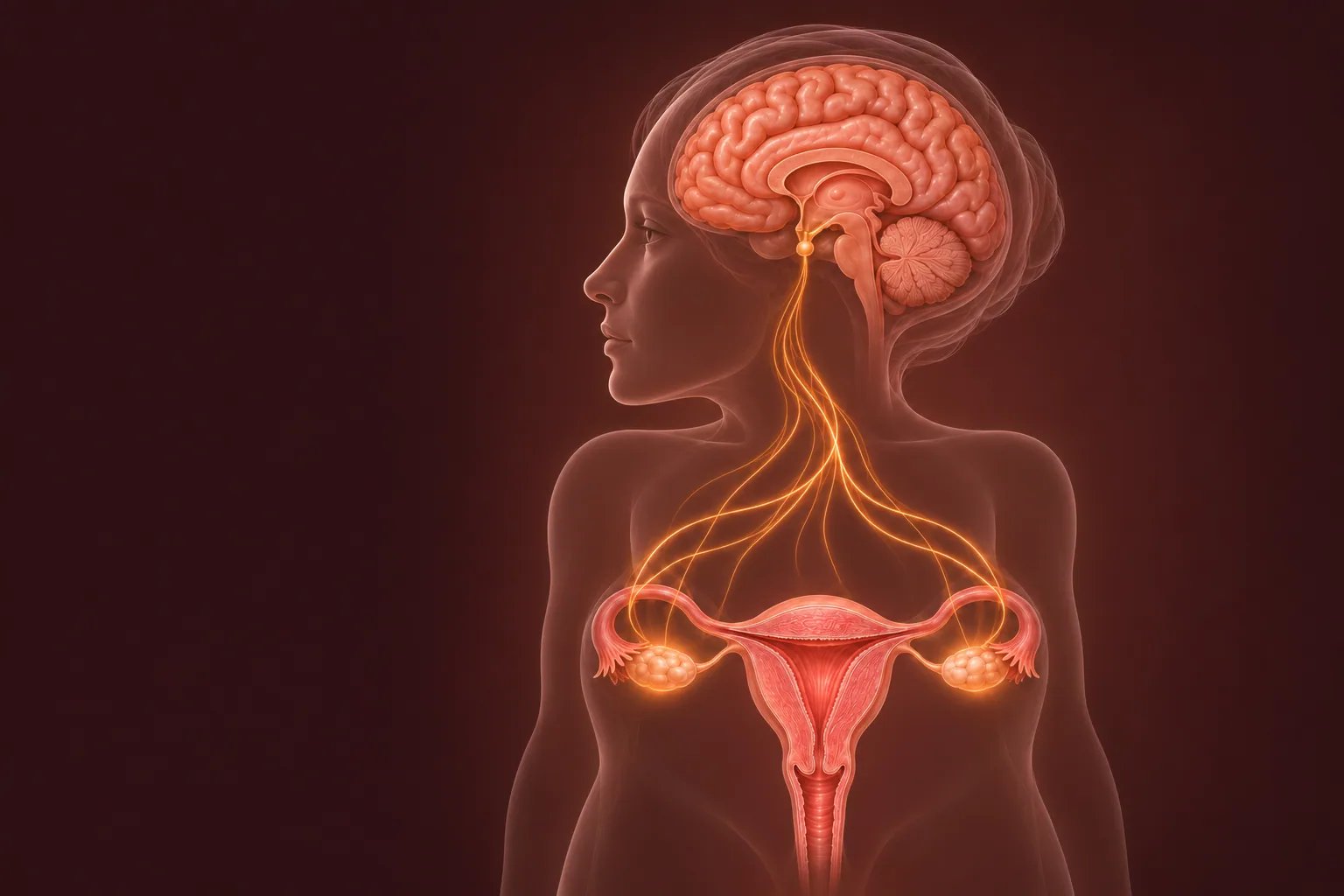
The menstrual cycle is a natural biological process regulated by a complex interaction between the brain, pituitary gland, ovaries and reproductive hormones.

It prepares the body for a possible pregnancy each month, even if pregnancy does not occur.

Illustration of a woman in profile with the brain, pituitary gland, ovaries and uterus glowing softly, joined by luminous threads
Brain(hypothalamus)Pituitary gland(releases hormones)Ovaries(produce oestrogen and progesterone)Uterus(lining responds to hormones)

02 / The four phases

Explore the four phases.

Each phase involves different hormonal changes. Experiences, symptoms and how you feel can vary between individuals and from cycle to cycle.

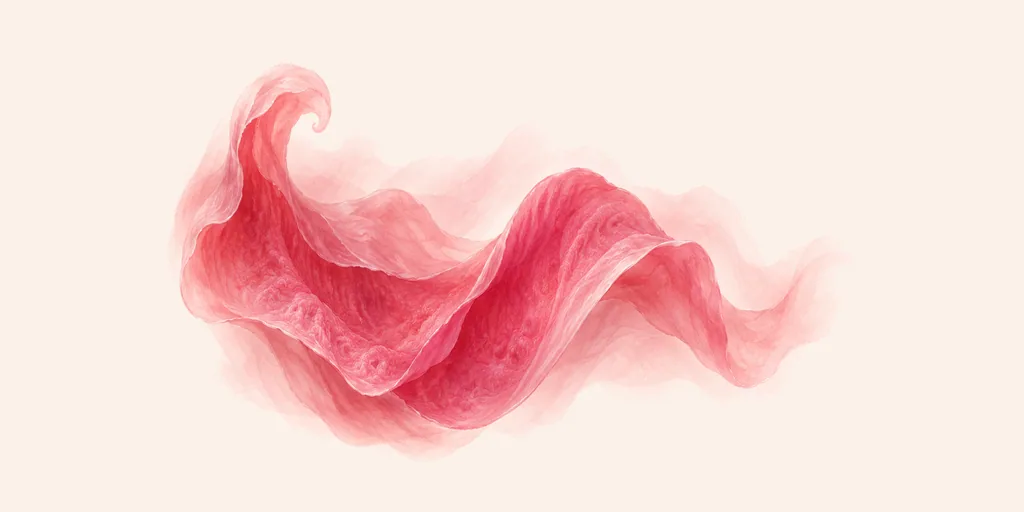
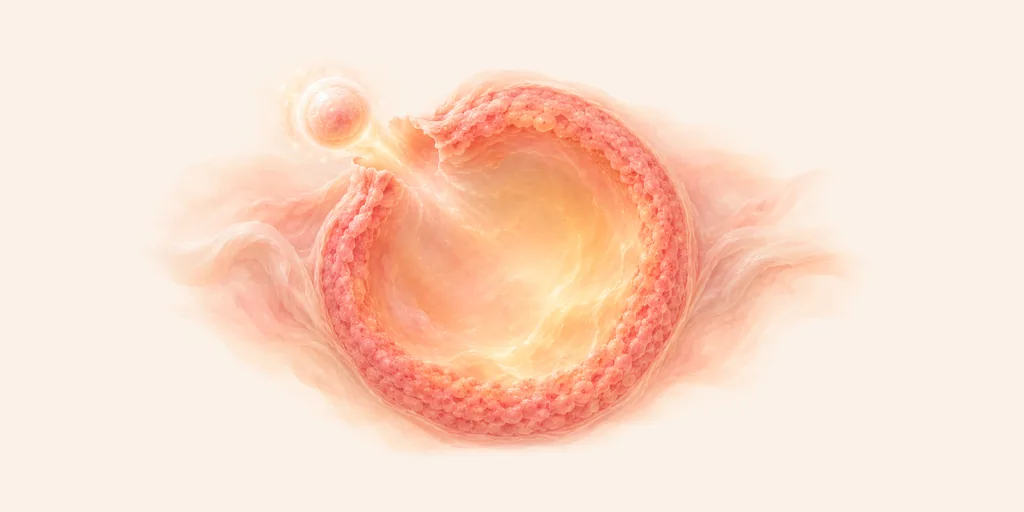
  1. Soft illustration of a folding ribbon of crimson tissue01

    Menstruation

    The uterine lining sheds, causing menstrual bleeding. This typically follows a fall in progesterone and oestrogen.

    Common experiencesBleeding, cramps, fatigue, bloating, mood changes.

    Typically days 1–5

    Day 1 of bleeding is counted as day 1 of the cycle. Bleeding usually lasts between two and seven days. Prostaglandins released as the lining sheds are one reason cramps occur. Flow, pain and duration all vary between women.

    Oestrogen and progesterone are at their lowest. Follicle-stimulating hormone (FSH) begins to rise, preparing the next group of follicles.

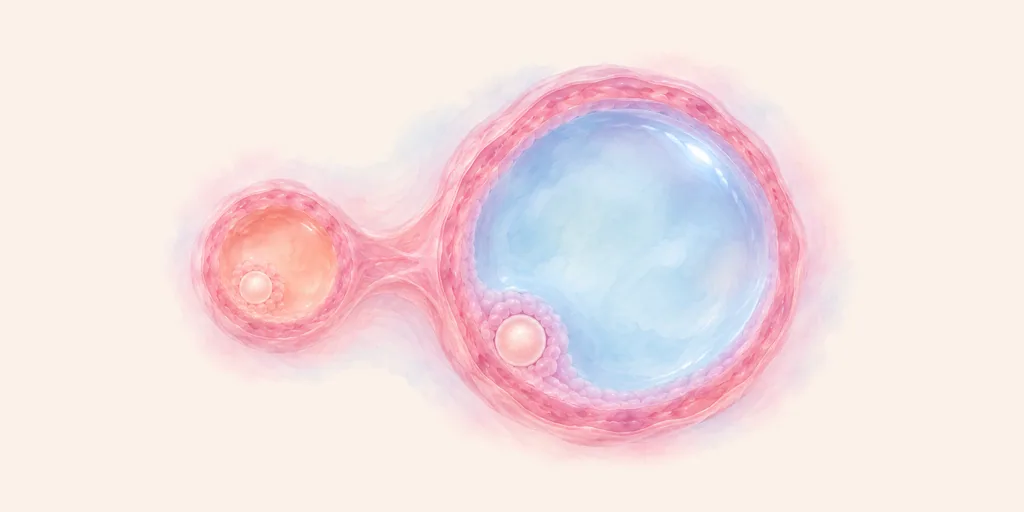
  2. Soft illustration of two developing follicles joined by a pink tube02

    Follicular

    Ovarian follicles develop and oestrogen generally rises. This phase begins on the first day of menstrual bleeding and overlaps with menstruation.

    Common experiencesRising energy, improving mood, mental clarity (may vary).

    Typically days 1–13

    Several follicles start to grow, and usually one becomes dominant. The uterine lining rebuilds. This is the most variable part of the cycle in length, which is why cycle lengths differ so much between women and from month to month.

    FSH stimulates the follicles; the growing follicle produces oestrogen, which rises steadily and peaks just before ovulation.

  3. Soft illustration of a mature follicle releasing an egg03

    Ovulation

    A surge in luteinising hormone (LH) triggers the release of an egg from an ovarian follicle.

    Common experiencesSome women feel greater energy, confidence and social drive (may vary).

    Typically around day 14

    The dominant follicle releases an egg, which is viable for roughly a day. Some women notice a brief one-sided ache or a change in cervical fluid; many notice nothing. Timing shifts from cycle to cycle.

    The oestrogen peak triggers a surge of LH (and a smaller rise in FSH). Ovulation follows about 24–36 hours after the surge.

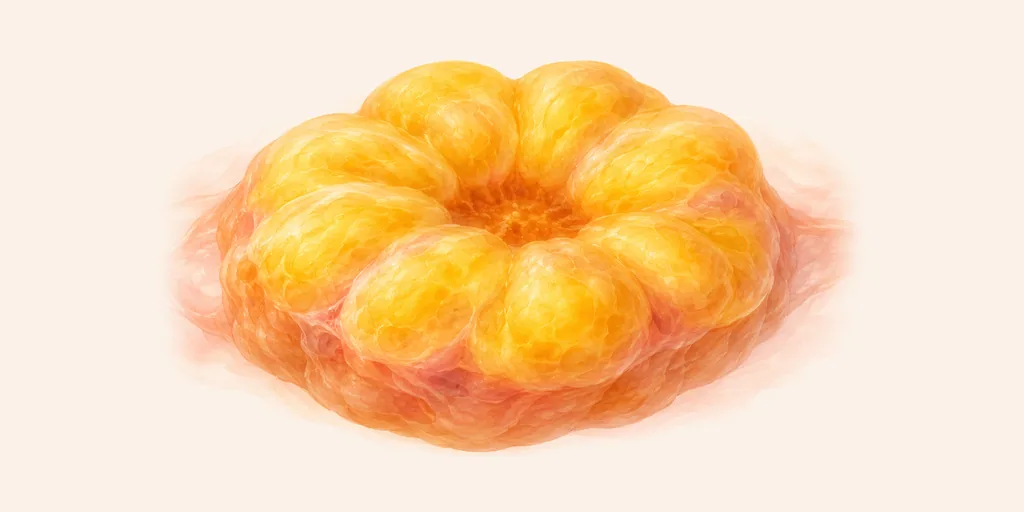
  4. Soft illustration of the corpus luteum as a golden, lobed body04

    Luteal

    Progesterone typically rises after ovulation. If there is no fertilised egg, hormone levels decline and the next period begins.

    Common experiencesChanges in mood, recovery needs and appetite (may vary).

    Typically days 15–28

    The empty follicle becomes the corpus luteum. Resting body temperature rises slightly and stays higher. If no pregnancy occurs the corpus luteum breaks down after about two weeks, and the fall in hormones starts the next period.

    The corpus luteum secretes progesterone and some oestrogen. Without a pregnancy both fall in the final days, which triggers menstruation.

These changes are possible experiences, not predictions about how you will feel.
Every woman’s cycle is unique, and no two cycles are exactly the same.

03 / How your body may feel

More than just hormones.

Hormonal changes can influence many aspects of your health and wellbeing. The effects vary widely between individuals.

  • Pain, cramps and bloating
  • Energy and fatigue
  • Mood and emotional wellbeing
  • Sleep and body temperature
  • Recovery and perceived effort
  • Appetite and cravings

04 / Exercise science

What does the research say?

Current evidence shows that hormonal fluctuations can influence some aspects of how women feel, but there is no consistent, universal pattern for performance or training adaptations.

  • EstablishedOestrogen and progesterone fluctuate during typical ovulatory cycles. Menstrual symptoms can affect daily wellbeing and, for some women, exercise participation.
  • Supported in practiceUnderstanding your individual symptoms and circumstances can help inform choices about training, recovery and appropriate support.
  • Not establishedThat all women experience predictable strength or performance changes in the same menstrual phase, or that prescribing particular workouts by phase produces better results.

05 / Myths vs facts

Let’s clear things up.

Cycle syncing can create unnecessary restrictions. Here we separate common myths from what we know and what remains uncertain.

06 / Individual circumstances

Everyone’s cycle is different.

Information on irregular cycles, hormonal contraception, PCOS, endometriosis, perimenopause, postpartum changes and when to seek professional support.

07 / Support & resources

Trusted information.

Access reputable resources, NHS guidance and professional support for menstrual health and related conditions.

Our commitment

Investing in women’s research, health and real-world impact.

Feel Harmoni is committed to advancing women’s health through education, research and collaboration. We are building partnerships with leading professionals, researchers, and private and public organisations to support greater understanding of female health, menstrual health, exercise and long-term wellbeing.

  • ResearchSupporting and contributing to evidence-based research in women’s health and exercise.
  • EducationProviding accessible, expert-led education to increase awareness and understanding.
  • CollaborationWorking with universities, health professionals and public organisations to drive positive change.
  • Real-world impactTurning knowledge into practical support that helps women live healthier, stronger lives.

Accuracy · Transparency · Independence

All content is developed with reference to current scientific evidence and reviewed by qualified professionals. This page is for educational purposes only and is not a substitute for professional medical advice.

View references
  1. NHS — Periods: overview, problems and help
  2. NHS — Menopause and perimenopause
  3. NHS — Polycystic ovary syndrome
  4. NHS — Endometriosis
  5. McNulty et al. (2020). The effects of menstrual cycle phase on exercise performance in eumenorrheic women: a systematic review and meta-analysis. Sports Medicine.
  6. Elliott-Sale et al. (2021). Methodological considerations for studies in sport and exercise science with women as participants. Sports Medicine.
  7. Colenso-Semple et al. (2023). Current evidence shows no influence of women’s menstrual cycle phase on acute strength performance or adaptations to resistance exercise training. Frontiers in Sports and Active Living.

Be first through the door

We deserve to Feel Harmoni.

Join the waitlist for the first invitation to our Bethnal Green home, membership news and the app launch.

See where we are opening next